Assam VFA (Veterinary Field Assistant) Exam-ক লক্ষ্য কৰি সম্পূৰ্ণ অসমীয়া ভাষাত High-Yield Biology Revision Notes (Animal Physiology Focus) দিয়া হ’ল। ছাত্ৰ-ছাত্ৰীসকলে সহজে বুজি পোৱাকৈ আৰু পৰীক্ষাত সঘনাই অহা পইণ্টসমূহ ইয়াত হাইলাইট কৰা হৈছে:
📚 জীৱবিজ্ঞান ৰিভিজন নোটচ: প্ৰাণী শাৰীৰবৃত্ত (Animal Physiology Focus)
Here is a highly dense, rapid-review Revision & Summary Note designed Assamese specifically for your students to review right before the exam. It is formatted to be skimmable and perfect for an end-of-post summary widget or downloadable cheat sheet.
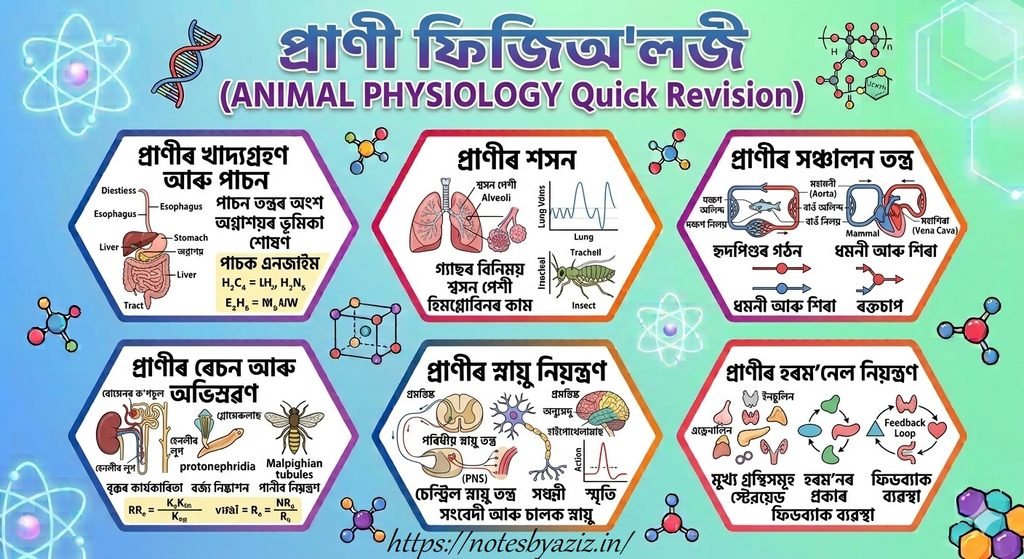
🎯 Quick Revision & Summary: Animal Physiology (অসমীয়া)
Assam VFA Exam — Last-Minute Revision Booster
🥛 ১/ পাচন তন্ত্ৰ (Digestive System)
- ৰুমিনেন্ট পাকস্থলী (Ruminant Stomach): চাৰিটা কোঠালী — Rumen, Reticulum, Omasum, Abomasum.
- বৃহত্তম অংশ: ৰুমেন (Rumen) — চেলুল’জ পাচন (Cellulose Fermentation) ঘটে।
- জাবৰ কটা (Regurgitation): ৰেটিকুলাম (Reticulum) — মৌচাক সদৃশ গঠন (Honeycomb).
- পানী শোষণ (Water Absorption): ওমাচাম (Omasum).
- প্ৰকৃত পাকস্থলী (True Stomach): অেবোমাচাম (Abomasum) — HCl আৰু পেপচিন ক্ষৰণ কৰে।
🩸 ২/ ৰক্ত সংবহন তন্ত্ৰ (Circulatory System)
- কোঠালী: স্তন্যপায়ী আৰু পক্ষীৰ হৃদযন্ত্ৰ ৪ টা কোঠালীযুক্ত (২ অলিন্দ, ২ নিলয়)।
- RBC ব্যতিক্ৰম: স্তন্যপায়ীৰ পূৰঠ RBC-ত নিউক্লিয়াছ নাথাকে। কিন্তু উট (Camel) আৰু লামা (Llama)-ৰ RBC নিউক্লিয়াছযুক্ত।
- তেজ গঁঠা (Blood Clotting): আৱশ্যকীয় উপাদান — ভিটামিন কে (Vitamin K) আৰু কেলচিয়াম (Ca²⁺) আয়ন।
৩/ শ্বসন তন্ত্ৰ (Respiratory System)
- গেছীয় বিনিময়: হাঁওফাঁওৰ বায়ুকোষত (Alveoli) ব্যাপন (Diffusion) প্ৰক্ৰিয়াৰে হয়।
- ডায়াফ্ৰাম (Diaphragm): কেৱল স্তন্যপায়ী (Mammals) প্ৰাণীৰ হে থাকে।
- ৰঞ্জক (Pigments): তেজত হিম’গ্ল’বিন (লো/Fe যুক্ত) আৰু পেশীত মায়’গ্ল’বিন।
🧪 ৪/ গুৰুত্বপূৰ্ণ হৰমন (Key Hormones)
- গাখীৰ ওলোৱা (Milk Letdown): অক্সিট’চিন (Oxytocin) — পশ্চাৎ পিটুইটাৰী গ্ৰন্থি।
- গাখীৰ উৎপাদন (Milk Synthesis): প্ৰ’লেক্টিন (Prolactin) — সমুখ পিটুইটাৰী গ্ৰন্থি।
- তেজৰ শৰ্কৰা (Blood Glucose): ইনচুলিন (Insulin) — অগ্ন্যাশয়ৰ বিটা কোষ।
- জৰুৰীকালীন হৰমন (Emergency): এড্ৰেনালিন (Adrenaline) — এড্ৰেনাল গ্ৰন্থি।
🦠 ৫/ মাৰাত্মক পশু ৰোগ (High-Yield Diseases)
- FMD (Foot & Mouth Disease): ভাইৰাছ (Aphthovirus) — খুৰা আৰু মুখৰ ঘাঁ।
- এন্থ্ৰাক্স (Anthrax): বেক্টেৰিয়া (Bacillus anthracis) — জুনেটিক ৰোগ (পশুৰ পৰা মানুহলৈ বিয়পে)।
- ব্ৰুচেল’চিছ (Brucellosis): বেক্টেৰিয়া (Brucella) — গৰ্ভৱতী পশুৰ গৰ্ভপাত ঘটায়।
The above revision notes are extremely important and act as a high-scoring asset for your website’s users preparing for the Assam VFA written exam.
Why These Notes are Critical for Students
- Biology Carries the Highest Weightage: In the official 100-mark OMR written test, Biology accounts for a massive 40% (40 Marks) of the entire paper. The remaining marks are split across Chemistry (20), Physics (20), and General Awareness (20).
- Highly Specific to the Job Profile: While standard AHSEC/NCERT Class 11 & 12 biology covers everything, this specific note isolates Animal Physiology & Husbandry Concepts. Exam setters prioritize these topics because they directly relate to the job role of a Veterinary Field Assistant.
- Direct Answers to Common MCQs: Standard questions regarding the “true stomach” of ruminants (Abomasum), the hormone for milk letdown (Oxytocin), or highly contagious diseases like FMD are recurrent favorites in animal husbandry technical tests.